





There are links on this site that can be defined as affiliate links. This means that we may receive a small commission (at no cost to you) if you purchase something through the links provided on this website.
Growing cannabis indoors can be rewarding, but it comes with its own set of challenges. Many beginners fail to grow cannabis in the house effectively because they overlook essential details. At Hempshop247, we’ve compiled a detailed guide on common mistakes to avoid for thriving indoor cannabis plants.
What is the Best Way to Grow Cannabis in the House?
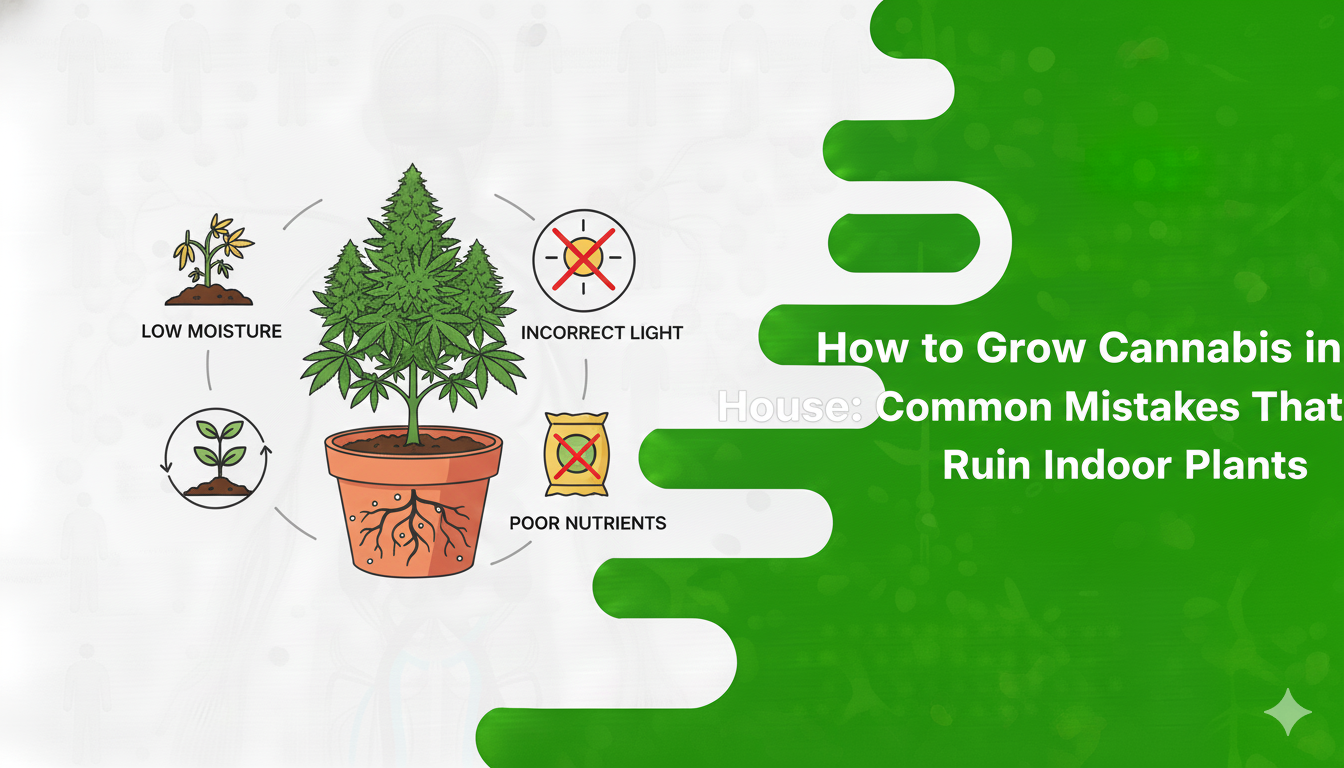
When you grow cannabis in the house, controlling the environment is key. Indoor cultivation allows you to manage light, humidity, and temperature. Most beginners make the mistake of relying solely on natural sunlight or neglecting air circulation. Using a combination of high-quality LED lights and proper ventilation ensures your plants receive optimal conditions.
Pro Tip: Avoid placing plants near windows that get inconsistent sunlight; artificial grow lights offer better control. For detailed guidance, check our article on how to make cannabis butter.
Which Mistakes Most Beginners Make When Growing Indoors?
Many new growers struggle because they ignore critical aspects such as:
- Overwatering or Underwatering: Cannabis plants need a balance. Overwatering can lead to root rot, while underwatering causes nutrient deficiencies. Learn the signs of each condition to prevent mistakes.
- Using Poor Soil: The wrong soil can hinder growth. Always choose well-draining, nutrient-rich soil. You can also check our guide on hemp seeds – a nutritional powerhouse to understand soil compatibility.
- Ignoring Light Cycles: Cannabis requires specific light cycles during vegetative and flowering stages. Many beginners either underexpose or overexpose their plants.
- Neglecting Pest Control: Indoor plants are still vulnerable to pests. Inspect your plants regularly and use safe, organic pesticides when needed.
How Can You Prevent Nutrient Deficiencies in Indoor Cannabis Plants?
Nutrient management is vital when you grow cannabis in the house. Common deficiencies include nitrogen, phosphorus, and potassium.
- Nitrogen Deficiency: Leaves turn yellow. Add nitrogen-rich fertilizer.
- Phosphorus Deficiency: Dark leaves with purple hues. Use phosphorus supplements.
- Potassium Deficiency: Yellowing leaf edges. Potassium-rich fertilizers help.
Check out our article on best CBD oils for finding relief naturally to understand the importance of nutrients in plant and human health alike.
What is the Ideal Environment for Indoor Cannabis?
Maintaining the perfect environment can prevent most mistakes. Key factors include:
- Temperature: 70–85°F during the day, slightly cooler at night.
- Humidity: 40–60% for vegetative stage, 40–50% for flowering.
- Air Circulation: Prevents mold and strengthens stems.
Proper environmental control ensures that your plants grow healthy, avoiding common pitfalls seen in indoor cultivation guides like Grow Weed Easy.
Why Do Indoor Cannabis Plants Sometimes Grow Slowly?
Slow growth is often caused by:
- Poor lighting
- Overcrowded pots
- Nutrient imbalances
- Incorrect pH levels
Monitoring your pH between 6.0–7.0 ensures proper nutrient absorption. For edible enthusiasts, refer to our guide on can you eat expired edibles to ensure safe consumption while experimenting with your harvest.
How Often Should You Water Cannabis Indoors?
Watering frequency depends on plant size, pot type, and growth stage. A good rule is to water when the top inch of soil feels dry. Overwatering is one of the top mistakes that ruin indoor plants.
For beginners, check our tutorial on how to make cannabis brownies to understand how indoor growth affects the quality of your edibles.
FAQs
1. How long does it take to grow cannabis in the house?
Indoor cannabis plants usually take 3–5 months from seed to harvest, depending on the strain and conditions.
2. Can I grow cannabis without grow lights?
It’s possible but not recommended. Natural sunlight may be inconsistent, which can stunt growth.
3. What is the best soil for indoor cannabis?
A nutrient-rich, well-draining soil is ideal. Check our guide on hemp protein powder for related nutrient insights.
4. How can I avoid pests indoors?
Inspect plants weekly and use organic pesticides. Proper air circulation also prevents infestations.
5. Can I reuse soil for multiple cannabis grows?
Yes, but replenish nutrients before planting again to avoid deficiencies. For more guidance, see hemp oil for cooking.
Conclusion
Growing cannabis indoors can be highly rewarding if done correctly. The key to success is understanding the right light setup, watering schedule, soil, and nutrient balance. By avoiding common mistakes like overwatering, ignoring light cycles, and poor soil selection, you can enjoy healthy, potent plants all year round.
At Hempshop247, we provide resources and guides to help both beginners and advanced growers succeed. Remember to monitor your environment, choose the right soil, and always be vigilant about plant health. Your indoor cannabis garden will thank you!